Complete Guide to Preventing Plumbing Freezes and Burst Pipes
When the temperature drops, pipes can become ticking time bombs. A single freeze can lead to a burst, flooding your space, damaging walls, and turning a quiet night into chaos.
At Miller Legacy Plumbing, we know how fast things can go wrong—and how preventable most plumbing freezes really are. Whether you own a house or run a small business, understanding the risks and acting early can save you stress, money, and a big mess.
Why Do Pipes Freeze and Burst?
Water is sneaky. Unlike most materials, it expands as it freezes. When water inside your pipes turns to ice, it pushes outward—like a soda can left in a freezer. The pipe can only take so much pressure before it gives way.
Pipes most at risk? Those in unheated spaces: basements, crawl spaces, attics, garages, and exterior walls. Even a small draft can chill a pipe enough to cause trouble.
A burst pipe can dump gallons of water in minutes, causing structural damage, mold, and costly repairs. According to the Insurance Institute for Business & Home Safety, burst pipes are among the most common sources of property damage in cold climates.
Quick Safety Checklist for Winter 🧤
Stay ahead of the freeze with these fast, actionable steps:
- Know your main water shut-off valve location. Practice turning it off.
- Disconnect garden hoses. Drain outdoor faucets.
- Seal cracks and openings. Use caulk or foam to block cold air in walls and around pipes.
- Keep garage doors closed. Especially if water supply lines run through.
- Open cabinet doors. Let warm air circulate around sinks in kitchens and bathrooms.
- Set your thermostat. Keep it at the same temperature day and night—never below 55°F (13°C).
- Let faucets drip. A tiny trickle can prevent freezing in vulnerable lines.
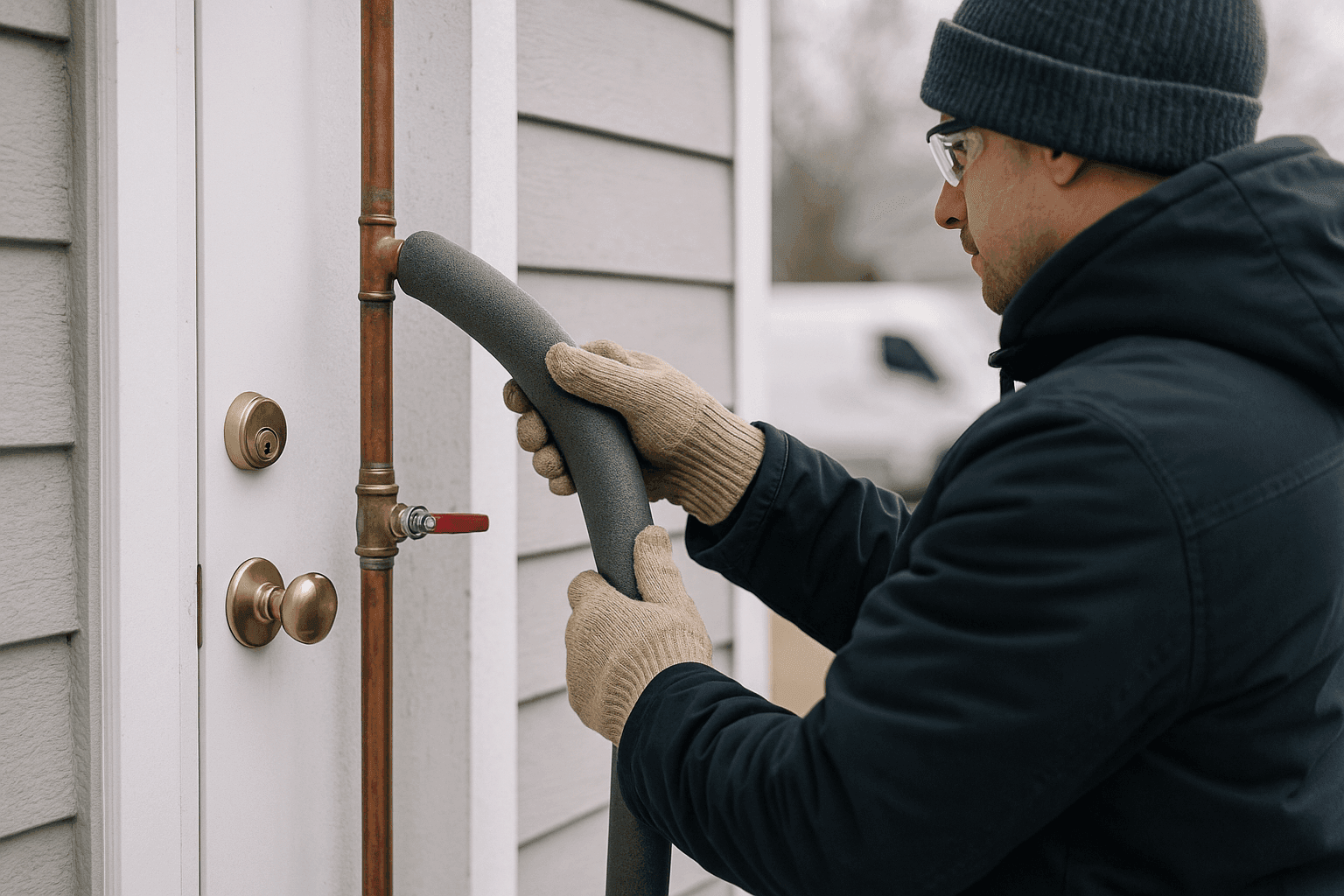
- Insulate pipes. Focus on exposed and exterior pipes using foam sleeves or fiberglass wrap.
Understanding How Pipes Freeze
Pipes freeze when the temperature around them drops below 32°F (0°C). But it’s not just about the outside temperature. Windy weather, poor insulation, and even small air leaks can chill pipes fast.
Think of your plumbing like a garden hose. If you leave water inside and it freezes, the hose swells and splits. The same happens inside copper, PEX, or PVC pipes—only the damage is hidden behind walls or under floors.
Vulnerable spots include:
- Pipes running along exterior walls
- Pipes in unheated basements, attics, or crawl spaces
- Outdoor hose bibs and irrigation lines
- Utility rooms with poor insulation
Top Preventative Measures for Winter
Protecting pipes is like bundling up before heading into a snowstorm. The better you insulate and prepare, the safer your plumbing system will be.
Pipe Insulation
- Use foam pipe insulation sleeves or fiberglass wrap on exposed pipes.
- Pay special attention to pipes in attics, basements, garages, and crawl spaces.
- For extra protection, add heat tape or heat cables (UL-listed only, and follow manufacturer instructions).
Maintain Consistent Heat
- Never let your thermostat drop below 55°F (13°C), even if you’re away.
- Open interior doors to allow heat to circulate.
- Close windows and seal drafts in rooms with plumbing.
Seal and Protect
- Caulk cracks in walls and foundations near pipes.
- Use weather stripping around doors and windows.
- Install insulated covers on outdoor faucets.
Water Flow
- Let cold water drip from faucets served by exposed pipes during extreme cold.
- Running water—even a trickle—helps prevent freezing.
Insulation and Heating Solutions 🏠
Insulation is your first line of defense. Think of it as a warm blanket for your pipes.
Types of Pipe Insulation
- Foam Tubing: Easy to install, affordable, and available at most hardware stores.
- Fiberglass Wrap: Good for high-temperature pipes, like hot water lines.
- Pipe Heating Cables: For high-risk areas, these cables provide gentle warmth. Always follow safety guidelines and manufacturer instructions.
Additional Heating Tips
- Use a portable heater in unheated rooms (never leave it unattended).
- Add insulation to attics, basements, and crawl spaces.
- Install a smart thermostat to maintain consistent temperatures.
Reference: The International Plumbing Code and Uniform Plumbing Code both recommend insulating water supply lines in unheated areas.
Emergency Steps if Pipes Freeze
Sometimes, even the best preparation isn’t enough. If you turn on a faucet and only a trickle comes out, you may have a frozen pipe.
What To Do Immediately
- Keep the faucet open. As the pipe thaws, water will begin to flow.
- Apply gentle heat. Use a hair dryer, heating pad, or towels soaked in hot water. Start near the faucet and work toward the frozen section.
- Never use an open flame. Avoid propane torches or any device with an open flame—this is a major fire risk.
- Check for leaks. Once thawed, look for cracks or water damage.
If you can’t find the frozen spot, or if you suspect a burst, shut off the main water valve and call for emergency plumbing help right away.
Seasonal Maintenance Routines
A little routine care goes a long way. Schedule these tasks as part of your regular home or business maintenance:
- Inspect insulation on all exposed pipes before winter.
- Test sump pumps and backflow prevention devices.
- Check for leaks, drips, or rust around water heaters and boilers.
- Schedule a professional plumbing inspection annually.
- Clean gutters and downspouts to prevent ice dams.
The Importance of Early Detection
Early warning signs can save you from disaster. Look for:
- Unusual drops in water pressure
- Frost on exposed pipes
- Damp spots or water stains on walls and ceilings
- Sounds of running water when all taps are off
If you notice any of these, act fast. The sooner you address the problem, the less damage you’ll face.
DIY vs. Calling a Pro
Some tasks are perfect for a handy homeowner. Others need a skilled touch.
Safe DIY Tasks
- Adding pipe insulation
- Sealing small drafts with caulk or foam
- Draining outdoor faucets and hoses
When to Call a Professional
- Suspected frozen or burst pipes
- Major leaks or water damage
- Installing heat cables or complex insulation
- Annual plumbing inspections
Professionals have the tools and experience to spot hidden risks, repair damage, and ensure your system meets safety codes.
What Professionals Do On Arrival 🧰
When you call Miller Legacy Plumbing for emergency plumbing, here’s what happens:
- Immediate assessment: We locate the frozen or burst section quickly.
- Shut-off and containment: Water is shut off to prevent further flooding.
- Safe thawing: We use approved heat sources and methods to thaw pipes.
- Damage inspection: We check for cracks, leaks, and water damage.
- Repairs: Damaged pipes or fittings are replaced or repaired to code.
- Prevention advice: We’ll recommend insulation or upgrades to avoid future issues.
Our team follows standards set by the International Association of Plumbing and Mechanical Officials (IAPMO) and the American Society of Plumbing Engineers (ASPE).
Costs & Time Factors
Pipe freeze repairs can range from minor fixes to major overhauls. Here’s what affects the cost and timeline:
- Location of the pipe: Pipes behind walls or underground take longer to reach.
- Extent of damage: A small crack is easier to fix than a major burst.
- Water damage: Flooded rooms may require additional drying and restoration.
- Materials: Copper, PEX, and PVC have different repair requirements.
Most emergency plumbing visits for frozen pipes take a few hours. Major repairs or water damage restoration can stretch over several days.
When It’s an Emergency
Not all frozen pipes are emergencies—but a burst pipe always is.
Call for emergency plumbing if:
- You see water leaking or spraying from a pipe.
- There’s standing water or flooding.
- You can’t locate or access the frozen section.
- The main water shut-off isn’t working.
Fast action can reduce water damage and repair costs.
FAQ: Preventing Plumbing Freezes
How cold does it have to get for pipes to freeze?
Pipes can start freezing when temperatures drop below 32°F (0°C), but most problems occur when temps stay below 20°F (-6°C) for several hours.
Are some pipe materials more freeze-resistant?
PEX piping is more flexible and can handle some expansion, but no pipe is completely freeze-proof. All exposed pipes should be insulated.
Should I leave heat on if I’m away for a few days?
Yes. Always keep your thermostat set to at least 55°F (13°C) and ask a neighbor or friend to check your property during prolonged cold snaps.
What if I rent my home or business space?
Talk to your landlord about winterization and ask who’s responsible for pipe insulation and emergency plumbing repairs.
Special Considerations for Businesses and Multi-Unit Properties 🏢
- Commercial buildings often have larger, more complex plumbing systems.
- Schedule regular inspections and maintenance, especially before winter.
- Ensure all staff know where the main water shut-off is located.
- Consider installing temperature monitors and leak detection sensors in vulnerable areas.
- For multi-unit buildings, communicate freeze prevention steps to all tenants.
Protect Your Plumbing—All Winter Long
Plumbing freezes and burst pipes don’t have to be part of your winter story. With the right preparation, routine maintenance, and a little help from professionals, you can keep your home or business safe, dry, and running smoothly.
Call Miller Legacy Plumbing now — or reach us anytime at 888-859-6692 .